We are at an inflection point. In early 2026, AI stopped being a productivity experiment and became operational infrastructure. The question is no longer "should we use AI?" -- it is "how fast can we build it into everything we do before the gap widens further?"
This post breaks down the five most consequential AI developments happening right now, with data, real examples, and what each one means for your business.
1. Agentic AI Goes Mainstream -- And Gets Complicated
The single biggest shift in AI this year is the move from chatbots to agents -- systems that do not just answer questions but take actions, execute multi-step workflows, and make decisions autonomously.
The numbers are striking. According to recent research, 96% of organizations are already deploying AI agents in some capacity, and Gartner projects that 40% of enterprise applications will include task-specific AI agents by year end. EY launched enterprise-scale agentic AI for its global audit practice. Google Cloud and Avid announced a multi-year partnership bringing agentic AI to media production workflows.
But there is a catch. 94% of organizations report concern about AI sprawl -- agents deployed outside governance frameworks creating security gaps and technical debt. The companies pulling ahead are those pairing deployment speed with orchestration rigor: clear boundaries for autonomous action, defined escalation paths to humans, and FinOps discipline for agent compute costs.
What this means for you: Agentic AI is not a future roadmap item -- it is live in your competitors' stack today. The window to build governance-first agent infrastructure is narrow.
2. Multimodal and Reasoning Models: The New Benchmark War
The frontier model race in 2026 is defined by two axes: multimodality (understanding text, images, audio, and video simultaneously) and reasoning depth (thinking through complex, multi-step problems before generating output).
GPT-5.4 Pro currently leads composite benchmarks at a score of 92, followed by Gemini 3.1 Pro at 87 and Claude Opus 4.6 at 85. But the more interesting story is the challengers. Meta Superintelligence Labs released Muse Spark on April 9 -- a natively multimodal reasoning model with visual chain-of-thought and multi-agent orchestration built in. LG's EXAONE 4.5 outperformed both GPT-5-mini and Claude 4.5 Sonnet on STEM benchmarks with an average score of 77.3 across five key categories.
What this means in practice: the days of choosing a single model for your entire stack are ending. Sophisticated teams are routing tasks to the right model for the job -- a reasoning-heavy compliance check goes to Opus 4.6, a fast customer response goes to a lighter open-weights model, a visual document parser goes to a multimodal specialist.
What this means for you: Model selection is now a strategic decision, not a default. The best AI products in 2026 are model-agnostic architectures that route intelligently by task type and cost.
3. Open Source vs. Closed Source: The Gap Is Closing Fast
In 2023, closed-source models held 80-90% of enterprise market share. That balance is shifting dramatically. Q2 2026 analysis shows the performance gap has narrowed to reasoning-heavy tasks only -- open-weights models now match or exceed closed models across most practical business use cases.
The economic argument is hard to ignore. Closed models cost on average six times more than open alternatives. Optimal reallocation toward open models could save the global AI economy an estimated $25 billion annually. Open-source inference costs have dropped to a few cents per million tokens for self-hosted deployments -- a 70-90% cost reduction versus API pricing from major providers.
The market forecast: enterprises are expected to move toward a 50-50 split between open and closed models, using closed frontier models for highest-stakes reasoning and open models for high-volume, cost-sensitive workloads like classification, summarization, and routing.
What this means for you: Locking your stack into a single closed-source provider is an expensive risk. Smart architecture in 2026 is hybrid by design.
4. AI Workflow Automation: From Pilot to Operating Model
Gartner projects that 80% of enterprises will rely on AI APIs and workflow automation platforms to manage core business processes by end of 2026. That number would have seemed impossible two years ago. Today it is tracking to be an underestimate.
The driving force is hyperautomation -- the coordinated deployment of AI, ML, RPA, and process intelligence as a boardroom strategy rather than an IT initiative. Deloitte and ServiceNow's 2026 automation trends report identifies orchestration as "the connective tissue that makes AI useful at scale." Natural-language co-pilots are also becoming standard, letting non-technical operators build workflows without scripting expertise.
The emerging risk is shadow AI -- teams deploying agents and tools outside enterprise guardrails, creating fragmentation, unpredictable downtime, and security exposure. The organizations pulling ahead are building with governance baked in: defined boundaries for autonomous action and clear escalation paths back to humans.
At Codility Solutions, we have seen this pattern across clients in healthcare, SaaS, and professional services. The teams shipping the fastest are not the ones with the most AI tools -- they are the ones with the clearest operational boundaries for where AI acts and where humans decide. Projects like Impact Intelligence and Resyme show what production-grade AI automation infrastructure actually looks like when it is built to last.
What this means for you: If your workflows still run on manual handoffs, spreadsheets, and tribal knowledge, you are not just inefficient -- you are structurally outcompeted by organizations that have automated those same processes.
5. AI Regulation: The Rules Are Being Written Now
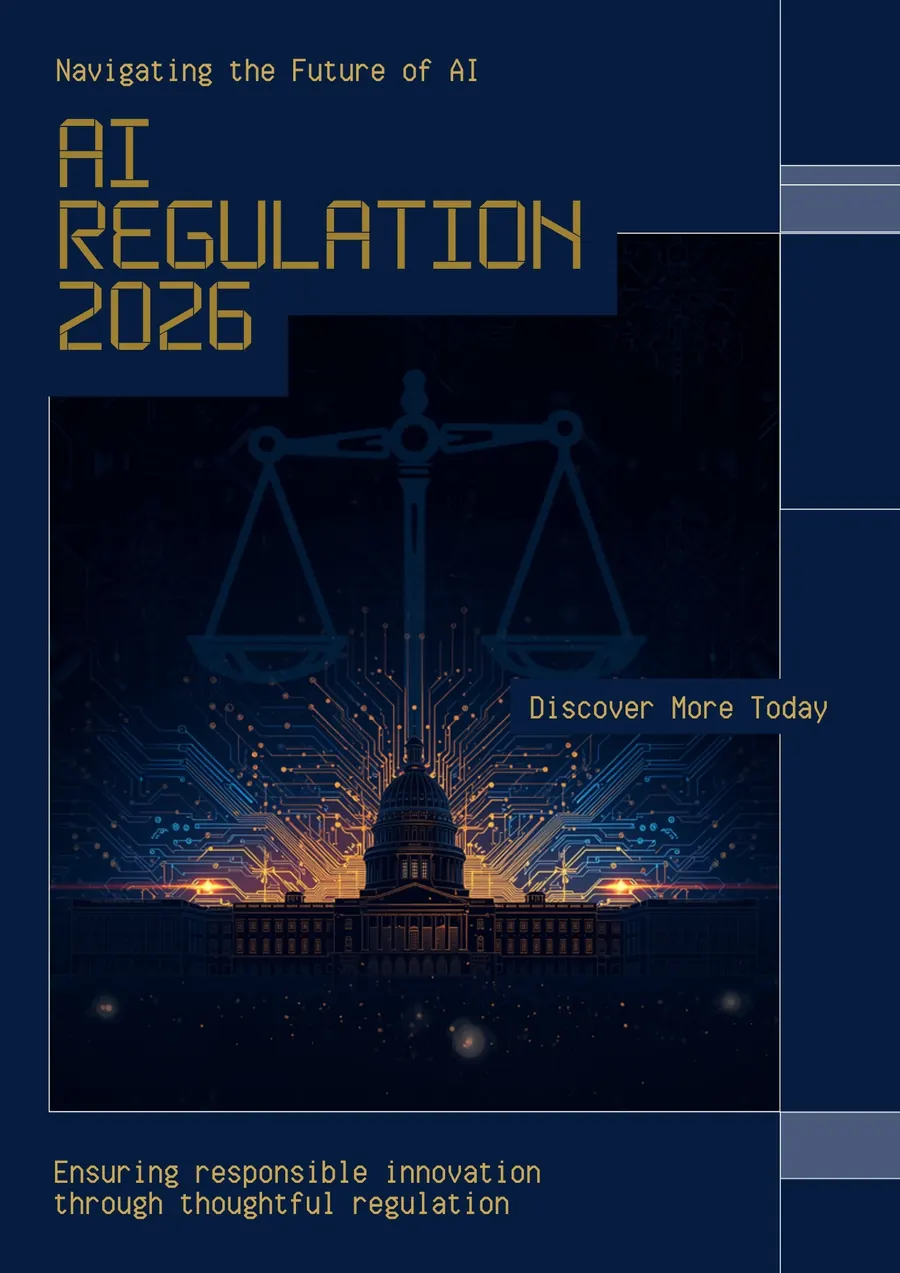
April 2026 is the most consequential month for AI policy in US history. On March 20, the White House released its National Policy Framework for Artificial Intelligence, spanning seven legislative pillars: child protection, AI infrastructure support, intellectual property, free speech, innovation enablement, workforce preparation, and state law preemption.
New York's RAISE Act took effect March 19, imposing transparency, compliance, safety, and reporting requirements on frontier model developers. Colorado's AI Act comes into force June 30, adding algorithmic discrimination obligations for any system making consequential decisions. The federal-versus-state tension is live -- Congress is actively debating whether to preempt the patchwork of state laws with a single national standard.
For founders and enterprise leaders, this is not abstract compliance risk. Contracts, liability exposure, data handling requirements, and model documentation obligations are all shifting in real time. The organizations that wait to retrofit governance onto deployed agents will pay a significant cost premium over those who designed compliance in from day one.
What this means for you: Build compliance hooks into your AI systems now. Retrofitting governance onto production agents is far more expensive than designing it in at the start.
The Gap Is Widening -- Which Side Are You On?
The defining story of AI in April 2026 is bifurcation. Companies that treat AI as a fundamental business architecture shift are compounding advantages every quarter. Companies still treating it as a tooling experiment are falling further behind -- and the gap is no longer measured in months.
The good news: the infrastructure -- agents, open models, automation platforms, multimodal APIs -- has never been more accessible. The barrier is not technology. It is the decision to build.
The best time to start was last year. The second best time is this quarter.